Silence and my past work at Blackburn High

Featured

I was invited by Mr Jason Ziino, Director of Music, to give a short speech at the 70th Anniversary of Blackburn High School in their Concert “Illuminations” on Monday 24th August held at The Round, formerly the Nunawading Arts Centre. For those who are connected with the school, you might like to read my address.

Blackburn High School presents – Illumination
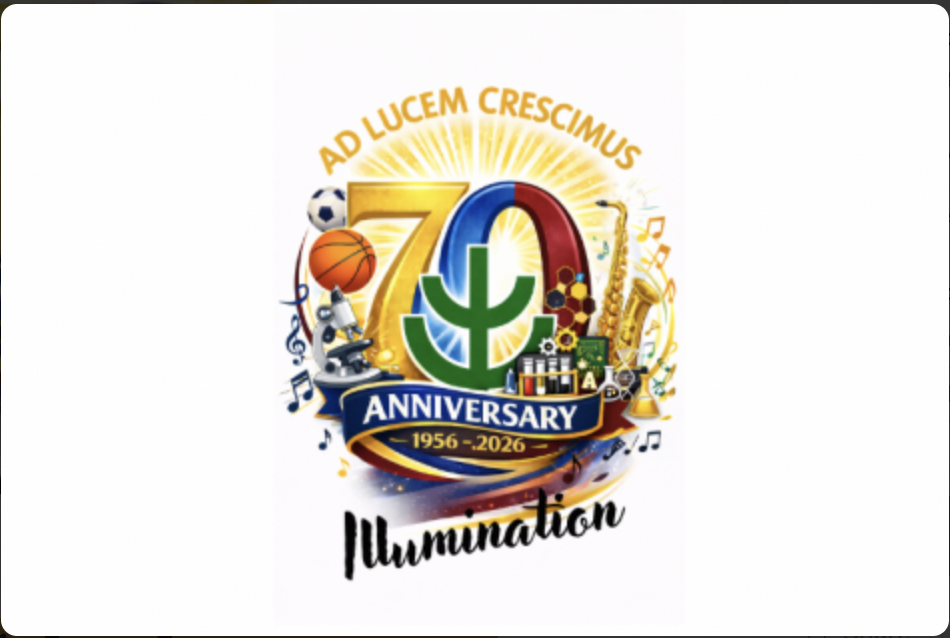
Illumination: Growing Together for 70 Years is Blackburn High School’s celebration of its 70th anniversary, staged at The Round in Nunawading. The evening combines student artistry and performance with a broader look back at the school’s history, making it a good fit for alumni, current families and anyone connected to the school community. Expect a mix of music, art and celebration rather than a single traditional concert format. Check The Round’s listing for ticketing and start time.

BLACKBURN HIGH SCHOOL

ILLUMINATION – 70th Anniversary of Blackburn High

70th ANNIVERSARY SPEECH

Roland Yeung

Monday 24th August 2026 The Round, Nunawading

Hello, I am Roland Yeung, a former Head of Music at the school. What wonderful concert this has been. You can be very proud.

It is a great honour to be invited back (I taught at the school from 1976 to 1992) to conduct the orchestra tonight. The students in the orchestra has responded beautifully to my conducting. They are well taught, they listen and they play beautifully. (We performed Copland’s Fanfare for the Common Man arr. Longfield for Symphony Orchestra.)

Jason invited me to speak for a few minutes – I wish to illuminate one thing about music and about my time teaching music at the school.

There is something that happens at every one of our concerts. We practise it at every rehearsal.

What is the first thing musicians create together?

It isn’t a sound.

We create SILENCE.

Before we can make music together, we learn to be silent together.

That silence says: we are here, we are ready, and we are about to do something together.

Perhaps silence is harder to create today. Our lives are noisier, our minds are busier, and technology constantly tugs our attention elsewhere. Yet for musicians, silence brings focus. We begin hearing the music before we play it.

And listen for silence tonight. It can create anticipation, tension, surprise — and sometimes even make you smile.

I started at Blackburn High School in 1976. My Principal was Mr Bill Charlton, my Music Coordinator was Ross Millikan, and I was one of four classroom music teachers.

At that time, schools had considerable freedom to develop their own curriculum.

Blackburn High School wisely chose Music.

Instrumental participation grew rapidly. Large junior ensembles meant that many students continued playing through to Year 12. Some studied Music academically; many others simply kept playing because they loved music and loved belonging to the community of the Music Department.

Later, as Jason has mentioned, I was seconded to the Victorian Curriculum and Assessment Board as the VCE Music writer.

So what did I put into the new VCE Music Study Designs?

Much of it came from Blackburn High School.

The Music Craft courses developed and refined here became core elements of VCE Music Study Designs, and many of those approaches can still be recognised today.

Thank you, Blackburn High!

When I arrived here, concert bands were new to me. My conducting experience had been with orchestras, choirs and Gilbert and Sullivan operettas.

So how did I become a band conductor?

Blackburn High School taught me.

In my time the school went on to win the Royal South Street Society Nicholson Prize seven times — an extraordinary achievement.

But the most important lesson was that conducting is never something you finish learning.

I am still learning about music, conducting and working with musicians. One of my greatest pleasures is meeting former Blackburn High students around Victoria who still have music in their lives. I have had the pleasure of conducting three of David Goddard’s compositions-two were world premieres.

I am now in my 40th year with the Grainger Wind Symphony, a community group based on excellence, based at the school, and in retirement I continue to conduct, teach and write about conducting.

When I think about where all of that began, I come back here.

Blackburn High School provided the foundation for the conductor and teacher I became.

So tonight, before the musicians play, listen for something that isn’t a sound.

Listen to the silence.

And perhaps, on this 70th anniversary, within that silence are:

seventy years of memories — and the anticipation of the next note.

Thank you, now on with the show!

Roland Yeung

Loading

I taught Cate Blanchett how to conduct an orchestra – Natalie Murray Beale

published in The Age January 18, 2023 — 2.40pm

This article was a fascinating description of how a professional conductor trained a brilliant Aussie actor Cate Blanchett for her role as Lydia Tár in the movie Tár, just released in USA at the end of 2022. So what does an actor need to learn to be authentic in the performance of a Mahler Symphony with a top symphony orchestra? A fascinating article for all conductors to read.

I Taught Cate Blanchett How To Conduct

Loading

New movie about Conductors – Tar

Tar starring Aussie actor Cate Blanchett has brought into public conversation the process of how a conductor releases a performance. I have enjoyed the reviews, interviews of Cate and the speech she gave when receiving an award in Florida in January 2023.

This film was released in USA in October 2022, but has not been released in Australia at the time of writing this post.

Two key observations Cate made about being a conductor and being involved in this project:

process and collaboration

Her summary of the film is “it just is”.

Review Cate’s own words through clicking on this link to Classic FM article ‘I didn’t base the character of Lydia Tár on anyone’ – Cate Blanchett in conversation with Classic FM 19th January 2023 – click here

Loading

Nodoka Okisawa conductor

I really enjoyed the conducting of Nodoka Okisawa conducting Debussy, Takemitsu, Ravel and Melody Eötvös. I thought she displayed excellent technique and control of the sounds made by the Melbourne Symphony Orchestra in concert on Saturday 15th October 2022 in Hamer Hall. I thought that she demonstrated a wonderful array of Saito Conducting techniques and so effectively. I found the concert so engaging, noticing how well the orchestra responded to her gestures and artistry. despite her slight stature, she had an enormous presence on the podium.

To see more details of the program click here

Loading

Teaching Conducting at Christ University, Bangalore

I have had the privilege of being a guest teacher of conducting at Christ deemed to be a university in Bangalore, India. The new music department is based on Western Art Music and I work with Professor Andrey Morozov and professor Travis Ashton-Bell. I started in July 2021. The basis of my teaching is the Saito Conducting Method. Of course I am not in India. I am in the land of “sweeping plains” teaching over Zoom, Google Drive, Google Classroom and OBS. I am learning a lot about using this technology and developing suitable materials. Everyone in India are so supportive and interested. It i both a challenge and at lot of fun!

To see FaceBook post click here

Loading

Roland presenting at Australian National Band and Orchestra Conference WA 2021 ‘Music Moves Us’

Roland Yeung, long time ABODA contributor and life member, presented as part of ANBOC 2021 hosted in Western Australia. He presented two sessions which were recorded on video. ANBOC 21 was an on-line only conference.

ANBOC 2021 Music Moves Us presented by ABODA WA

Presentation One: The Creativity of Percy Grainger. This provides an update on new and exciting resources related to ‘Understanding the Creativity of Percy Grainger’ including the new Grainger Journal and discussions on Grainger’s folk song studies.

List of Resources click here to download

Presentation Two: In The Beginning – Then What Happened!! Roland will be exploring how young teacher-conductors can use conducting strategies and techniques to ensure excellent performances at festivals and competitions. The conducting techniques demonstrated use the principles of the Saito Conducting Method.

List of conducting resources click here.

Four slides from the video showing: 1. Shakui, 2. Tataki, 3. Heikin Undo, 4. 3 Saito Conducting Techniques, 5. Commencing

Link to Facebook page for ANBOC21 https://www.facebook.com/vic.aboda/photos/a.3731577733609931/3731577620276609

Loading

Simon Rattle “Conducting Is Hard”

‘Conducting is hard – it doesn’t get easier’: Simon Rattle’s top conducting tips18 Classic FM September 2017

Simon Rattle explains the complex role of the conductor. This sheds light on how and what a conductor does in rehearsal to ensure the best experience for everyone.

https://www.classicfm.com/artists/sir-simon-rattle/conducting-is-hard-advice-tips/

Click here to watch video

Loading

Somewhere Over The Rainbow – sung by Judy Garland in 1955

When compared to the smooth rendition of Over The Rainbow in the film click here, this performance may sound very choppy, slightly desperate and at time rather raw. … Here we see Garland 16 years later, and we can ‘hear’ how much of life she’s experienced. At times it’s as if we’re watching her battle every emotional demon in her life. But somewhere, in those final moments, she seems to make the decision that she’s going to survive. And at the moment it doesn’t matter whether or not the tone is beautiful, the pitch is perfect, or if the whole performance is a bit wobbly. All that matters is that for a moment, she allowed us to see so clearly into her heart.

To listen to the 1955 version, click here and enjoy!

From Popular Singing and Style by Donna Soto-Morettini 2nd edition page 234.

This performance comparison is illuminating when evaluating accuracy and artistry. When does “very choppy, slightly desperate and at time rather raw” become feelingful music? How does a performer achieve this without being judged as having poor rhythm?

The impact of Judy Garland’s 1955 singing is very emotional. How does the conductor accompany an interpretation like this. I imagine that the interpretation in rehearsals may not have been anything like the performance.

Wonderful singing and a wonderful challenge to be conducting the accompaniment. I would love to do that!

Roland.

Loading